
How many restrooms does a farm operation need?
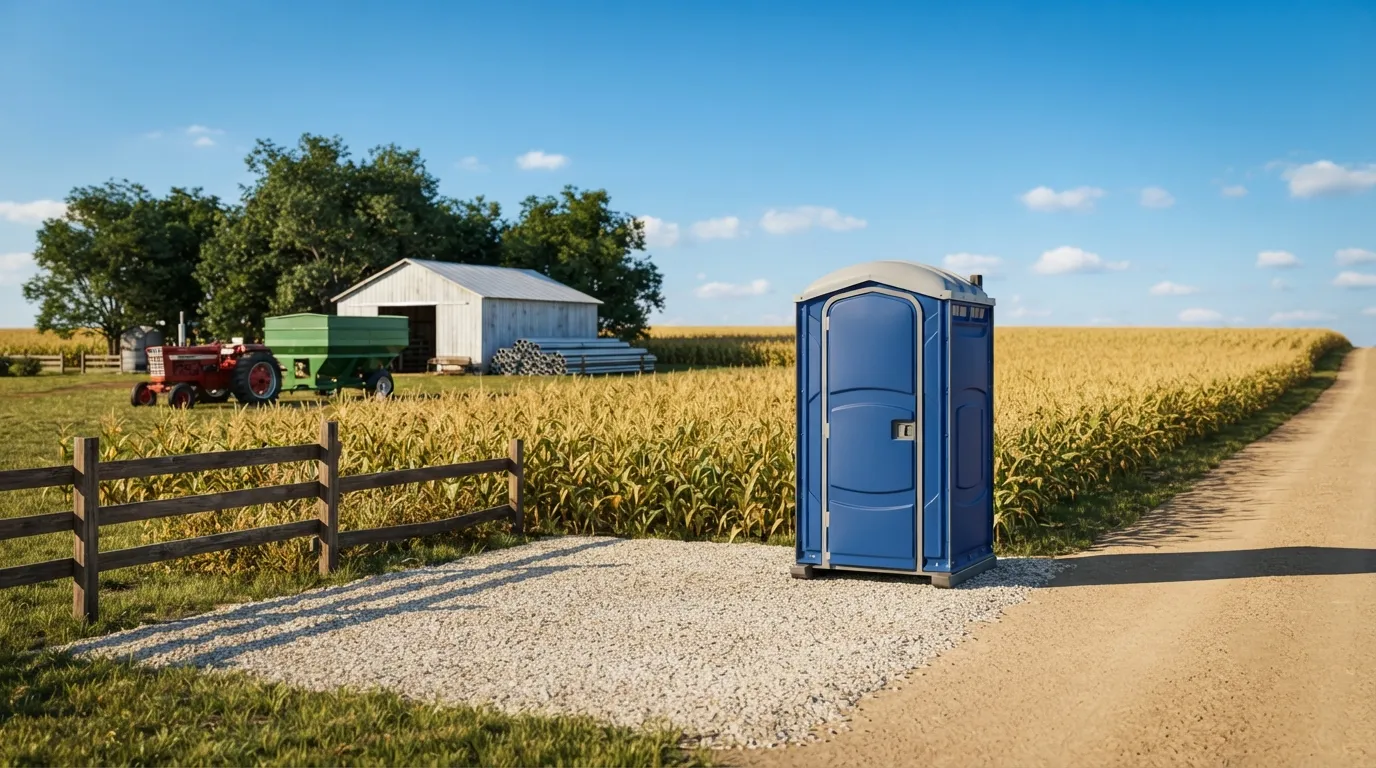
OSHA 1928.110 sets the baseline for field sanitation: one toilet and handwashing facility per 20 hand-labor employees, and it has to sit within a quarter mile walk or five minutes travel time from wherever people are working. That is not a suggestion for row crop or orchard crews around Dearborn, it is the standard we build placement around. A ten-person harvest crew needs one station. A forty-person crew spread across two fields usually needs two, positioned so nobody has to walk further than the rule allows. We help figure out the count during a quote request and we ask how the crew moves through the day, because a single fixed station rarely works for row crews that shift blocks every few hours. For general labor camps with a stationary workforce, the same logic that drives construction site services planning under OSHA 1926.51(c) applies: count heads, then count walking distance, then place units. Multi-unit farms often run a mix of standard porta potty rental units near the packing area and one portable sink near the equipment shed. If your farm also hosts a fall event or U-pick weekend, treat that traffic separately using our farm and agricultural restrooms planning guide alongside how many porta potties do I need.
What does handwashing setup need to include?
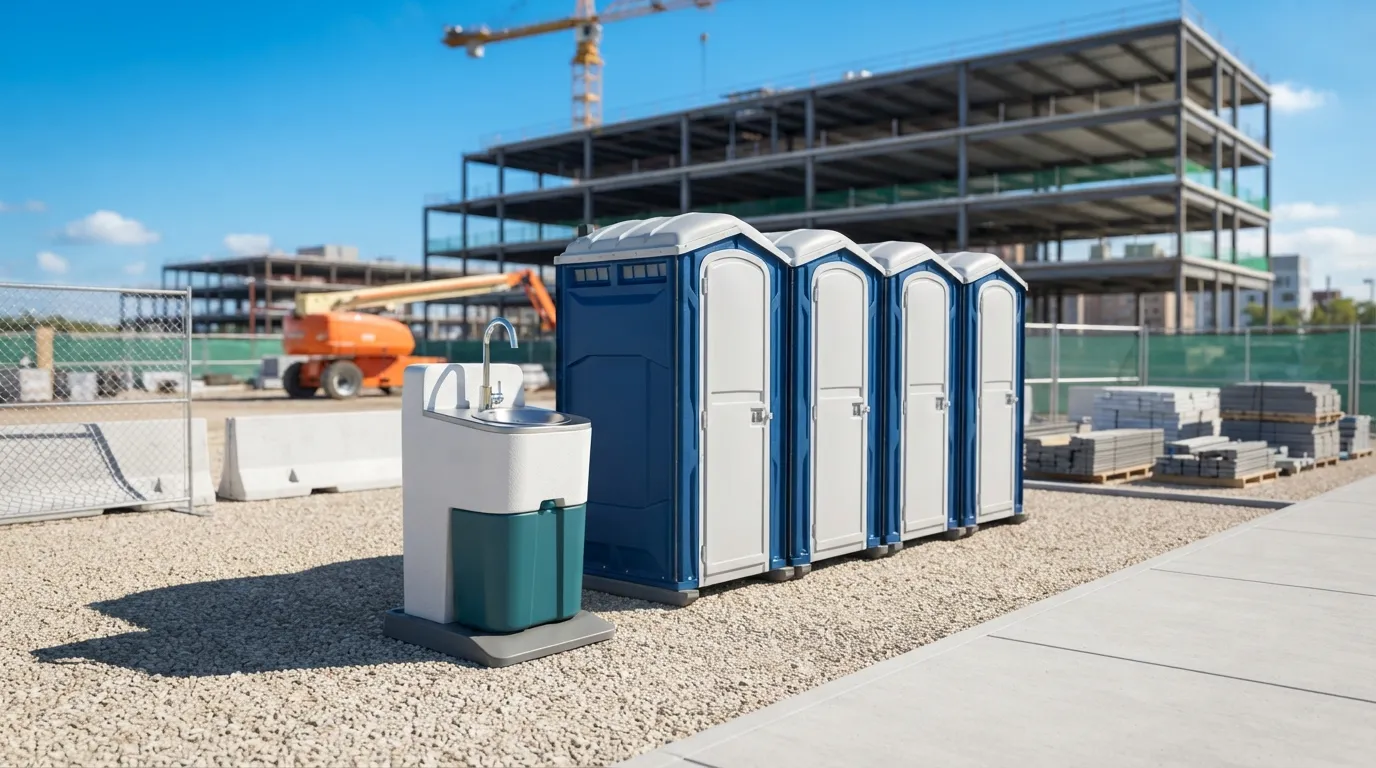
A compliant handwashing station needs potable water, soap, and single-use towels or a hand drying device, per 29 CFR 1910.141(d)(2). Hand sanitizer alone does not satisfy that rule, and a lot of farm operations get tripped up here because a sanitizer pump feels like enough. It is not, not for field labor and not for packing house staff. OSHA 1926.51(a)(1) also requires an adequate supply of potable water at any place of employment, which matters most in July and August when a single tank can run dry by midafternoon on a hot Dearborn day. We stock handwashing station rental units with foot pumps and soap dispensers built in, and a portable sink rental option for packing sheds that need a deeper basin. If your crew is spraying herbicides or insecticides, OSHA 1926.51(f)(1) requires washing facilities specifically because of that contaminant exposure, separate from general field sanitation. That is a different setup than a sanitizer station, and we will flag it if your operation involves chemical application. Farms running produce stands sometimes add a hand sanitizer station rental at the customer-facing point of sale, but that is on top of, not instead of, the crew handwashing station. Full requirements are laid out on our handwashing requirements page.
Do farms near Dearborn need permits for portable restrooms?
Placement in the public right of way needs confirming with the City of Dearborn before delivery, and we have not verified a specific ordinance number for agricultural placement, so we check with the city on your behalf rather than guess. Most farm placements sit entirely on private land, which usually keeps things simple, but any unit near a public road frontage or a shared drive should get a quick call first. We handle that check as part of scheduling through porta potty permit requirements and dumpster permit requirements if you are also clearing out an old barn or fence line. Farms around Dearborn, including operations toward Redford about 9.6 miles northwest and Taylor about 9.9 miles southwest, run the same check with their local jurisdiction, and rules differ enough town to town that we never assume one city's answer applies to another. If you are hosting a fall festival, corn maze or seasonal market on the property, that draws a different crowd pattern than day labor, and we plan it more like county fair restrooms or festival restroom rental than a standard field setup. A standard unit runs about 44 by 48 inches on the ground and 92 inches tall, which fits most farm access roads without trouble, though gravel and mud lanes are worth mentioning when you call.
| unit | month | week | day |
|---|---|---|---|
| standard | 125-325 | 130-500 | 100-350 |
| storage | 100-250 | - | - |
Farms often pair a storage container rental with restroom service for a season, keeping tools and event supplies locked up between harvests. For quick-turn ag jobs, porta potty rental per day pricing covers a single delivery, while season-long placements fit better under monthly porta potty rental. Full cost breakdowns live on porta potty rental cost.
How often do farm restroom units get serviced?
ANSI/PSAI Z4.3 sets a baseline of one service visit per week for units seeing regular use across a 40 hour week. Heavier harvest crews or U-pick weekends often need twice-weekly service. We schedule around your labor calendar, not a fixed day, since planting and harvest timing shifts every season.
Can a septic tank on a farm property still handle restroom overflow?
A residential-scale septic tank is typically pumped every 3 to 5 years depending on tank size and household or crew load. Heavy seasonal use from hired labor speeds that up. Pair portable units with septic pumping service scheduling so the fixed system is not carrying peak-season load alone.
Do agricultural handwashing stations need a water hookup?
No. Our stations carry their own potable water supply and do not need a hookup, which is why they work at field edges with no plumbing nearby. They still need refilling on a schedule tied to crew size and how hot the week is.
What is the difference between field sanitation rules and construction site rules?
Field sanitation under OSHA 1928.110 sets a quarter mile walk limit and a 20-worker ratio. Construction under OSHA 1926.51(c) scales differently by headcount, detailed on osha portable toilet requirements. Different industries, different math, same core idea: proximity and ratio.
Can one restroom station serve multiple fields on the same farm?
Only if every field stays within the quarter mile walk OSHA 1928.110 requires. Once crews spread past that distance, a second station is the fix, not a longer walk. We map field layout during scheduling to catch this before delivery day.
Next step
Get a delivery date
Tell us the address, the dates and the headcount. We size the order and confirm the route.