
Do You Need a Permit for a Porta Potty in Dearborn?
It depends on where the unit sits, not on the fact that it exists. A porta potty parked on your own driveway or backyard for a home renovation project typically does not trigger a permit review anywhere we have worked. Dearborn Porta Pros places most residential and small contractor units this way, and it is the fastest path from order to delivery.
The situation changes the moment a unit sits on a public sidewalk, street, or city-owned strip near the curb. That kind of placement is NOT VERIFIED against a specific Dearborn ordinance in what we have on file, so we tell every customer to confirm right-of-way rules with the city directly rather than guess. The same logic applies to a roll-off dumpster staged at the curb: whether you need a permit for a dumpster on a street is a live question in plenty of cities, from a jersey city dumpster permit desk to a roll-off dumpster rental delaware office, and Dearborn deserves its own answer, not one borrowed from either jurisdiction. The same holds for portable toilet rental delaware customers who assume their rules travel; a delaware porta potty rental permit does not apply here any more than a Dearborn one applies there. If your event or job site sits close to a public way, read our porta potty placement guide before you finalize a layout.
What Are the Porta Potty Rules and Regulations for Placement?
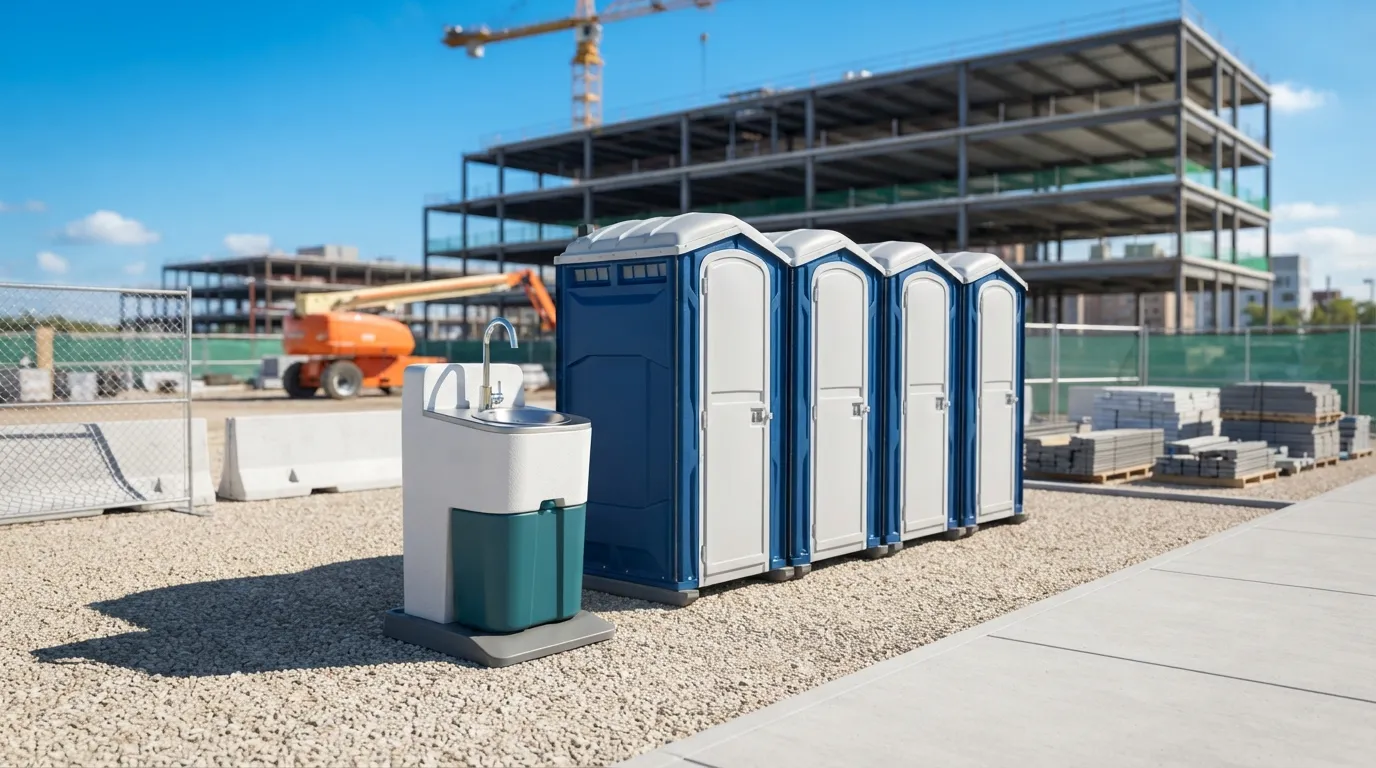
Placement rules split into two buckets: what the site itself demands, and what OSHA requires if workers are on the clock. On the site side, ADA Standards section 302.1 calls for a stable, firm, slip-resistant surface under any accessible unit, and section 304.3.1 calls for a 60 inch turning circle so a wheelchair user can maneuver. A standard unit sits about 44 by 48 inches on the ground and stands roughly 92 inches tall, so give it clearance from fences, low branches, and parked equipment. Our full porta potty placement guide walks through setback distances and ground conditions in more detail.
If this is a construction job, OSHA 1926.51(c)(1) sets the toilet count: one facility for 20 workers or fewer, then one toilet seat and one urinal per 40 workers once you pass 20, dropping to one per 50 once the crew hits 200. Our OSHA portable toilet requirements page breaks that ratio down by crew size, and how many porta potties do I need turns it into a quick calculator. For farm labor crews, OSHA 1928.110 sets a different bar: one facility per 20 hand-labor employees, reachable within a quarter mile walk, which matters for farm and agricultural restrooms work around Dearborn.
What About Dumpster and Storage Container Permits?
A roll-off dumpster raises its own placement question, separate from porta potty rules. If the dumpster sits entirely on private property, most jobs move forward without a permit call. If it needs to sit in the street, even overnight, that is the same right-of-way question as a portable toilet and it needs the same call to the city before delivery. Our dumpster permit requirements page covers this in more depth, and construction dumpster rental covers the sizing side.
Physical clearance matters regardless of permit status. A roll-off delivery needs about 60 feet of straight clearance behind the truck to swing the container off the frame, so a narrow Dearborn driveway or a tight alley near a job site can rule out a spot even where the paperwork is clean. Check dumpster sizes and dimensions before you commit to a placement. A storage container rental faces the same street-versus-private-lot question, and a mobile office trailer rental or a temporary power pole tied into it can add its own temporary power pole permit layer that a city inspector, not this page, has to confirm.
Where Should Units Be Placed on a Dearborn Job Site?
Placement is partly a permit question and partly a practical one. OSHA 1926.56(a) sets minimum illumination for construction areas, which matters if a unit sits somewhere workers reach after dark. OSHA 1926.202 requires barricades around hazards to meet ANSI D6.1, relevant if a porta potty or a temporary fence rental run sits near excavation or heavy equipment. OSHA 1926.25 keeps debris cleared from work areas, so a unit placed where waste piles up daily is a housekeeping problem before it is anything else.
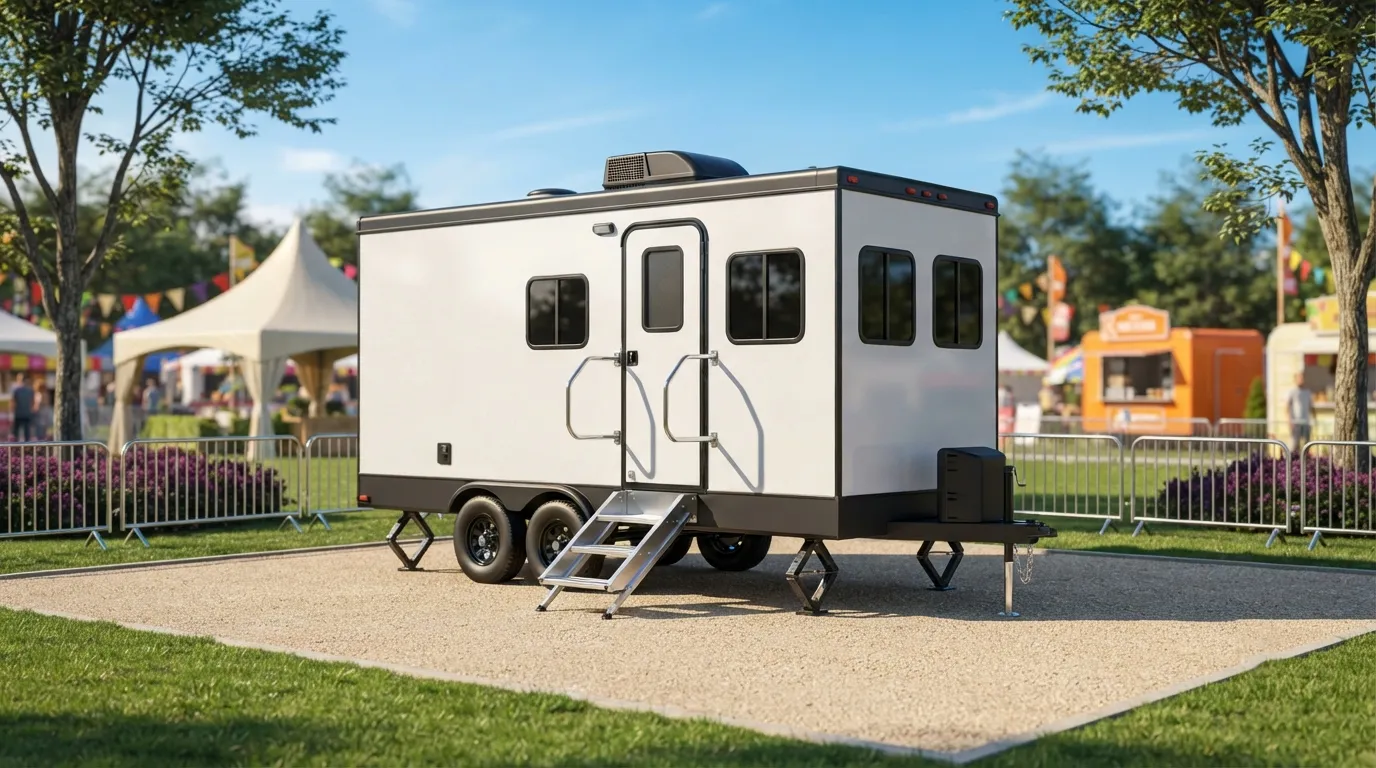
For events, a wedding restroom rental or a festival restroom rental usually sits on private grounds or a permitted event footprint, which sidesteps most of the street-placement question entirely. Dearborn sees plenty of both, and the venue contract, not a city permit, often governs exact spot selection. Crews working within about 5.4 miles of Dearborn in Allen Park, or the 9.6 miles out toward Redford, run into the same right-of-way logic; the city line does not change the underlying question, only which office answers it.
Do I need a permit for a porta potty on my own property in Dearborn?
Usually not. A unit placed entirely on private land, away from the street and sidewalk, is the most common setup we deliver and it typically clears without a permit review. Confirm with the city if your property line runs close to a public right of way.
Is a permit required for a dumpster parked in the street?
Likely yes, but this is NOT VERIFIED against a specific Dearborn ordinance here. Curbside or street placement almost always needs city sign-off in comparable jurisdictions. Call the city before delivery day rather than after the truck arrives.
How many porta potties does OSHA require on a job site?
OSHA 1926.51(c)(1) sets one toilet for 20 workers or fewer, then one seat and one urinal per 40 workers up to 200. Above 200 workers, the ratio drops to one per 50. See how many porta potties do I need for worked examples.
Does an accessible unit need special placement?
Yes. ADA Standards section 213.2 requires at least 5 percent of clustered single-user units to be accessible, never fewer than one. Section 304.3.1 requires a 60 inch turning circle around it, so give that unit more clearance than a standard one.
Can I get a permit fast enough for an emergency job?
Timelines depend entirely on the city office handling right-of-way requests, which we cannot quote here. For urgent placement needs, our emergency porta potty rental team can often deliver to private property same day while you sort permit questions separately.
Next step
Get a delivery date
Tell us the address, the dates and the headcount. We size the order and confirm the route.